

Ashwagandha Tincture for Capsule Haters is a practical format question. You may want ashwagandha, but not the routine that often comes with it: large capsules, gritty powder, long tea preparation, strong herbal smell, or a messy scoop. Liquid drops can feel simpler because they are quick to use, easy to measure, and often mix into water or another beverage.
Ashwagandha is commonly labeled as Withania somnifera, often with root or root extract wording. HerbEra’s ashwagandha tincture context shows why format matters: the same botanical can feel very different as drops, capsules, powder, or tea. The best choice depends on taste tolerance, serving style, portability, label clarity, and whether the product fits your health situation.
This guide explains how ashwagandha tincture compares with capsules, powder, and tea. It focuses on everyday usability, not inflated claims. You will learn what to check on the label, how alcohol-free drops differ from alcohol-based extracts, and when to ask a professional before using any ashwagandha product.
Is Ashwagandha Tincture Easier Than Capsules?
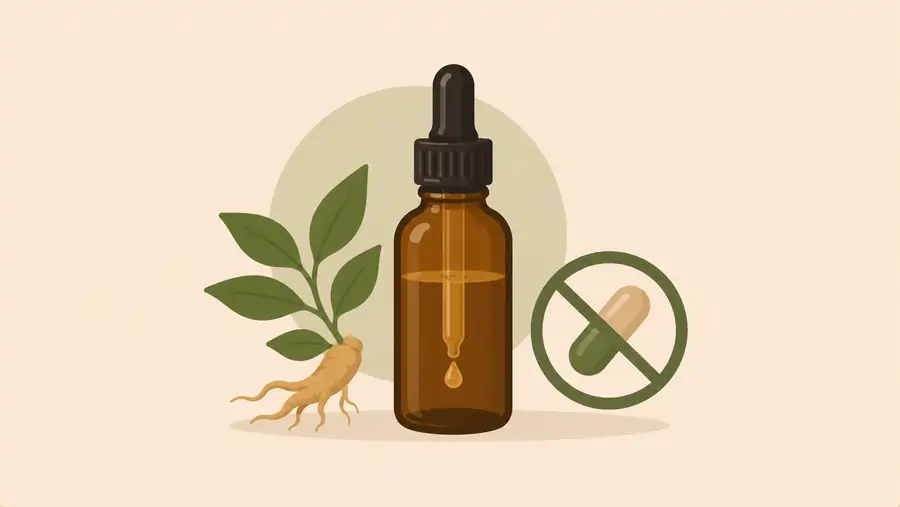
Ashwagandha tincture may be easier than capsules if you dislike swallowing pills, want a liquid format, or prefer a serving that can be mixed into water. Instead of swallowing one or more capsules, you measure drops, droppers, or milliliters according to the label.
Capsules can still be useful because they hide most taste and provide a fixed serving. But if capsules feel too large, uncomfortable, or inconvenient, a tincture can be a realistic alternative.
The practical answer
Choose tincture if you want liquid drops with minimal prep. Choose capsules if you want less taste and a fixed serving. Choose powder or tea only if you are comfortable with more preparation and stronger flavor exposure.
No format is automatically better for everyone. The right format is the one you can use exactly as directed.
What Is Ashwagandha Tincture?
Ashwagandha tincture is a liquid herbal extract made from ashwagandha plant material. Labels may use terms such as ashwagandha root, Withania somnifera root, liquid extract, alcohol-free extract, glycerite, drops, tincture, or root extract.
Traditional tinctures often use alcohol as part of the liquid base. Alcohol-free tincture-style products often use vegetable glycerin and water. The product title alone does not always tell you the base, so the other ingredients section matters.
Why liquid format feels different
Liquid drops do not require swallowing capsules or preparing tea. You can usually take them in water if the label allows it.
The tradeoff is taste. Drops contact the tongue, so you may notice earthy, bitter, sweet, or herbal notes more directly than with capsules.
Ashwagandha Tincture vs Capsules vs Powder vs Tea
Each format solves one problem and creates another. The table below shows the everyday differences for someone who hates capsules and does not want herbal tea.
| Format | Best fit | Main drawback | Label checks |
|---|---|---|---|
| Tincture | People who want quick liquid drops | Direct taste and drop measuring | Base, serving size, alcohol status, plant part |
| Capsules | People who want low taste exposure | Swallowing pills and fixed capsule count | Capsule shell, mg per serving, fillers, extract type |
| Powder | People who like mixing into drinks or food | Gritty texture, strong taste, scoop measuring | Serving grams, root powder, additives, flavoring |
| Tea | People who enjoy slow preparation | Brewing time and herbal taste | Plant part, tea blend ingredients, serving directions |
If your goal is to avoid capsules and skip tea preparation, tincture is the most direct middle option.
Why People Choose Liquid Drops Instead of Capsules
People often choose liquid drops because they want less swallowing, faster use, smaller packaging, and easier mixing. A dropper bottle can fit into a routine without a shaker, kettle, scoop, or capsule organizer.
Liquid drops may also help people who dislike the feeling of capsules or who have trouble swallowing large pills. This is a comfort and routine issue, not a medical claim.
Routine advantage
A tincture can be used quickly when the label directions are simple. You measure the serving, mix if directed, and move on.
If you dislike preparation, this can matter more than the format name.
What Does Ashwagandha Tincture Taste Like?
Ashwagandha tincture may taste earthy, bitter, root-like, slightly sweet, warm, or herbal. Alcohol-based extracts may taste sharper. Alcohol-free glycerin-based extracts may taste smoother and mildly sweet.
Taste depends on the plant material, extract base, concentration, serving size, and whether the product includes flavoring. Taste does not prove quality or strength.
How to reduce taste exposure
If the label allows mixing with water, dilute the serving in a small amount of water and drink the full serving. Water is the simplest first choice because it does not add caffeine, sugar, acidity, or extra herbs.
Do not add extra drops because the diluted taste feels mild.
Alcohol-Free Tincture vs Alcohol-Based Tincture
Ashwagandha tinctures can be alcohol-free or alcohol-based. Alcohol-free products often use vegetable glycerin and purified water. Alcohol-based tinctures may list alcohol, ethanol, cane alcohol, grain alcohol, or alcohol extract.
The base affects taste, mouthfeel, and personal preference. It does not automatically tell you whether one product is better for your routine.
| Feature | Alcohol-free drops | Alcohol-based drops |
|---|---|---|
| Main base | Often glycerin and water | Often alcohol and water |
| Taste | Smoother, mildly sweet, less sharp | Sharper, warming, stronger bite |
| Mouthfeel | May feel slightly thicker | Usually thinner |
| Main question | Is sweetness from glycerin or added sugar? | Is alcohol acceptable for this user? |
| Best label check | Glycerin, water, sugar terms, flavoring | Alcohol wording and warning statements |
If you avoid alcohol, do not assume a dropper bottle is alcohol-free. The label should say so clearly.
Does Alcohol-Free Mean Sugar-Free?
No. Alcohol-free does not automatically mean sugar-free. It only means alcohol is not the main liquid carrier. Many alcohol-free extracts use vegetable glycerin, which tastes sweet but is not the same as a syrup-style sweetener.
Some products may also include flavors, sweeteners, or other taste modifiers. The ingredient list is the only reliable place to check.
Sugar and flavor terms to scan
Look for sugar, cane sugar, syrup, honey, agave, glucose, fructose, sweetener, natural flavor, flavoring, vegetable glycerin, glycerin, and purified water.
If you monitor sugar for dietary or medical reasons, ask the brand for confirmation before use.
What Label Terms Should You Look For?
A clear ashwagandha tincture label should identify the common name, botanical name, plant part, liquid base, serving size, suggested use, warning section, lot number, and expiration date.
The most useful botanical term is Withania somnifera. The plant part is often root, but some formulas may use root extract, root powder, or other wording.
Best label wording
Look for Withania somnifera root or ashwagandha root extract. Then check whether the product is alcohol-free, glycerite-style, alcohol-based, flavored, or blended with other herbs.
HerbEra’s liquid extract context is best read this way: identify the botanical and plant part first, then read the base and serving directions.
Is Tincture Faster Than Tea or Powder?
For daily preparation, tincture is usually faster than tea or powder. Tea needs brewing, steeping, temperature control, and cleanup. Powder needs measuring, mixing, and texture tolerance. Tincture usually needs only measuring and mixing if the label allows it.
This does not make tincture medically stronger or more suitable. It simply makes the routine easier for many users.
Prep-time logic
If you skip supplements because preparation annoys you, a low-prep format can matter. Convenience often decides whether people follow label directions consistently.
Choose the format you can use without improvising.
Portability: Bottle, Capsule Jar, Powder Tub, or Tea Bag
Capsules are usually the most portable because they are dry and easy to count. Tinctures are portable but require a sealed bottle and careful packing. Powders are bulkier and may need a scoop. Tea bags are portable but still need hot water and time.
If your routine happens at home, tincture can be easy. If you travel often or use supplements at work, capsules may still be simpler unless you are committed to liquid drops.
Practical storage check
For tinctures, check whether the cap seals tightly, the dropper is intact, and the bottle can stand upright. Also read storage directions.
A leaky dropper bottle can ruin portability.
Serving Control: Drops vs Capsules
Tinctures often use drops, droppers, or milliliters. Capsules usually use a fixed capsule count. This changes how serving control feels.
Liquid drops may allow a labeled range, but they require careful measuring. Capsules feel more consistent, but they may be harder to adjust if the label does not allow it.
Who should prioritize fixed serving
Capsules may be better if you want the simplest repeatable serving. Tinctures may be better if you are comfortable measuring liquid and following dropper directions.
Do not change the serving size on your own because the taste feels mild, strong, or familiar.
What If You Also Hate Herbal Taste?
If you hate capsules and herbal taste, your choice becomes more specific. A tincture may solve the capsule problem, but it may not fully solve the taste problem. Alcohol-free glycerin-based drops may taste smoother, but ashwagandha can still have an earthy root flavor.
Capsules hide taste better. Tincture offers easier swallowing and less prep. Powder and tea usually create the most taste exposure.
Best compromise
Choose an alcohol-free tincture if you want liquid drops and a smoother taste profile. Choose capsules if avoiding taste matters more than avoiding pills.
If neither format feels acceptable, it may not fit your routine.
Who Should Ask Before Using Ashwagandha?
Ask a qualified healthcare professional before using ashwagandha tincture, capsules, powder, or tea if you are pregnant, nursing, taking medication, managing a medical condition, preparing for surgery, buying for a child, or using multiple supplements.
Also ask first if you have thyroid concerns, liver concerns, autoimmune conditions, sedative medication use, sleep medication use, anxiety or mood medication use, or a history of strong reactions to herbs.
Bring the exact label
Bring the product name, Supplement Facts, other ingredients, plant part, liquid base, serving directions, warning section, lot number, and expiration date.
A clinician or pharmacist needs the actual label, not just the phrase ashwagandha tincture.
What Claims Should You Treat Carefully?
Be cautious with broad claims about stress, sleep, calm, cortisol, anxiety, mood, hormones, thyroid, energy, focus, recovery, or guaranteed results. These claims do not tell you whether the product format fits your routine or health context.
Ashwagandha products should not be used to treat, cure, prevent, diagnose, reverse, detox, cleanse, flush, or manage any health condition.
Use label facts first
Before considering marketing language, confirm Withania somnifera, plant part, serving size, liquid base, capsule shell, other ingredients, warnings, and product condition.
If you have symptoms, ask a qualified healthcare professional instead of relying on supplement claims.
Red Flags Before Buying
Red flags include no botanical name, no plant part, no Supplement Facts panel, no serving size, unclear alcohol status, missing base ingredients, vague proprietary blend wording, broad medical claims, no warning section, no expiration date, no lot number, or product images that conflict with the written description.
For tinctures, also watch for unclear dropper directions. For capsules, watch for unclear capsule shell materials and hidden fillers.
Do not guess through label gaps
Ask the seller for a current full label photo. If the answer is vague, choose a clearer product.
Convenience should not replace basic label transparency.
Questions to Ask Before Buying
Ask direct questions if the product page does not clearly explain the format. A useful brand answer should identify the botanical name, plant part, liquid base, capsule shell, serving directions, alcohol status, and warnings.
Do not accept broad phrases such as premium, calming, traditional, potent, or easy to use as substitutes for label facts.
Useful support questions
Ask: “Is the botanical name Withania somnifera?” Ask: “Is the plant part root?” Ask: “Is the tincture alcohol-free?” Ask: “Does it use vegetable glycerin and water?” Ask: “Can the drops be mixed with water?” Ask: “Does it contain sugar, sweeteners, or flavors?”
Also ask whether the current bottle label matches the product page.
Checklist: How to Choose Ashwagandha Without Capsules or Tea
Use this checklist if you want ashwagandha but dislike capsules, powder, and tea preparation. It helps you compare liquid drops by taste, prep time, portability, serving control, and label clarity.
Define the format problem
Decide whether you mainly hate swallowing capsules, tasting herbs, brewing tea, cleaning powder, or measuring servings. Your main problem should guide the format choice.
Confirm the botanical name
Look for Withania somnifera on the label. This confirms the plant identity more clearly than common name alone.
Check the plant part
Look for root, root extract, or root powder. Plant part wording helps you compare products.
Identify the liquid base
Look for alcohol-free, vegetable glycerin, glycerin, purified water, alcohol, ethanol, or tincture base wording.
Review taste clues
Glycerin may taste mildly sweet. Alcohol may taste sharp. Ashwagandha itself may taste earthy or bitter.
Check mixing directions
Look for directions about mixing drops in water or a beverage. Water is usually the simplest first option.
Compare serving style
Check drops, droppers, milliliters, daily frequency, and timing. Choose a serving style you can follow consistently.
Read safety warnings
Check cautions for pregnancy, nursing, medication use, thyroid concerns, liver concerns, autoimmune conditions, surgery, and children.
FAQ
Is ashwagandha tincture good for people who hate capsules?
It can be a practical option because it uses liquid drops instead of pills, but you still need to consider taste and label directions.
Does ashwagandha tincture taste strong?
It may taste earthy, bitter, sweet, or herbal depending on the plant material and liquid base.
Can I mix ashwagandha tincture with water?
Yes, if the label allows or directs it. Mixing with water can soften taste without changing the amount in the serving.
Is tincture easier than ashwagandha tea?
Usually yes for preparation. Tincture does not require brewing, steeping, or cleanup like tea.
Is tincture easier than ashwagandha powder?
Often yes. Tincture avoids gritty texture, scooping, and mixing powder into food or drinks.
Does alcohol-free mean sugar-free?
No. Alcohol-free does not mean sugar-free. Check the label for glycerin, sugar, syrup, sweeteners, and flavors.
What botanical name should I look for?
Look for Withania somnifera. It identifies ashwagandha more precisely than the common name alone.
Who should ask before using ashwagandha?
Ask first if you are pregnant, nursing, taking medication, have thyroid or liver concerns, have an autoimmune condition, or use several supplements.
Can ashwagandha replace medical care?
No. Do not use it to treat, cure, prevent, diagnose, reverse, detox, cleanse, flush, or manage any condition.
Glossary
Ashwagandha
A common name for Withania somnifera, a plant used in many supplement formats.
Withania somnifera
The botanical name that identifies ashwagandha more precisely than the common name alone.
Ashwagandha tincture
A liquid ashwagandha extract measured in drops, droppers, or milliliters.
Root extract
An extract made from the root material of a plant.
Alcohol-free tincture
A liquid herbal extract made without alcohol as the main carrier, often using glycerin and water.
Glycerite
An alcohol-free liquid extract that uses glycerin as a major carrier.
Vegetable glycerin
A sweet-tasting liquid carrier often used in alcohol-free herbal extracts.
Capsule shell
The outer casing of a capsule, often made from gelatin, cellulose, or vegetarian capsule materials.
Serving size
The amount the label defines as one serving, such as drops, milliliters, capsules, or grams.
Supplement Facts
The label panel that lists serving size, dietary ingredients, and amounts per serving for a supplement.
Conclusion
Ashwagandha Tincture for People Who Hate Capsules can be a simple middle option between pills, powder, and tea. Check Withania somnifera, root wording, liquid base, taste clues, serving directions, warnings, and product condition before choosing it.
Sources Used
Botanical identity reference for ashwagandha, Withania somnifera plant profile – Plants of the World Online
Consumer guidance on supplement use and label reading, Dietary Supplements: What You Need to Know – NIH Office of Dietary Supplements
General dietary supplement labeling guidance, Dietary Supplement Labeling Guide – FDA
General supplement safety and clinician discussion guidance, Using Dietary Supplements Wisely – National Center for Complementary and Integrative Health
Consumer safety overview for ashwagandha use and precautions, Ashwagandha Overview – MedlinePlus
General medication and supplement review context, Safe Use of Medicines – MedlinePlus